Our Grassroots Network: How WDC Works Island-wide
The Women’s Development Centre (WDC) has long recognised that lasting social change cannot be delivered through short-term projects or centralised structures alone. Instead, it must be rooted within communities and led by women themselves. Guided by this belief, WDC has developed a distinctive, grassroots-driven model for expanding its work across Sri Lanka, one that prioritises partnership, local leadership, and sustainability.
In 2001, WDC initiated the formation of community-level women’s groups in districts beyond Kandy. These groups were created as safe spaces where women could come together to discuss shared concerns, build solidarity, and collectively respond to issues affecting their lives. Over time, these groups were systematically capacitated, strengthened, and formalised into Community-Based Organisations (CBOs).
This marked the beginning of WDC’s Network of Women (NoW) — a structure designed to embed WDC’s vision, values, and rights based approach within local communities.
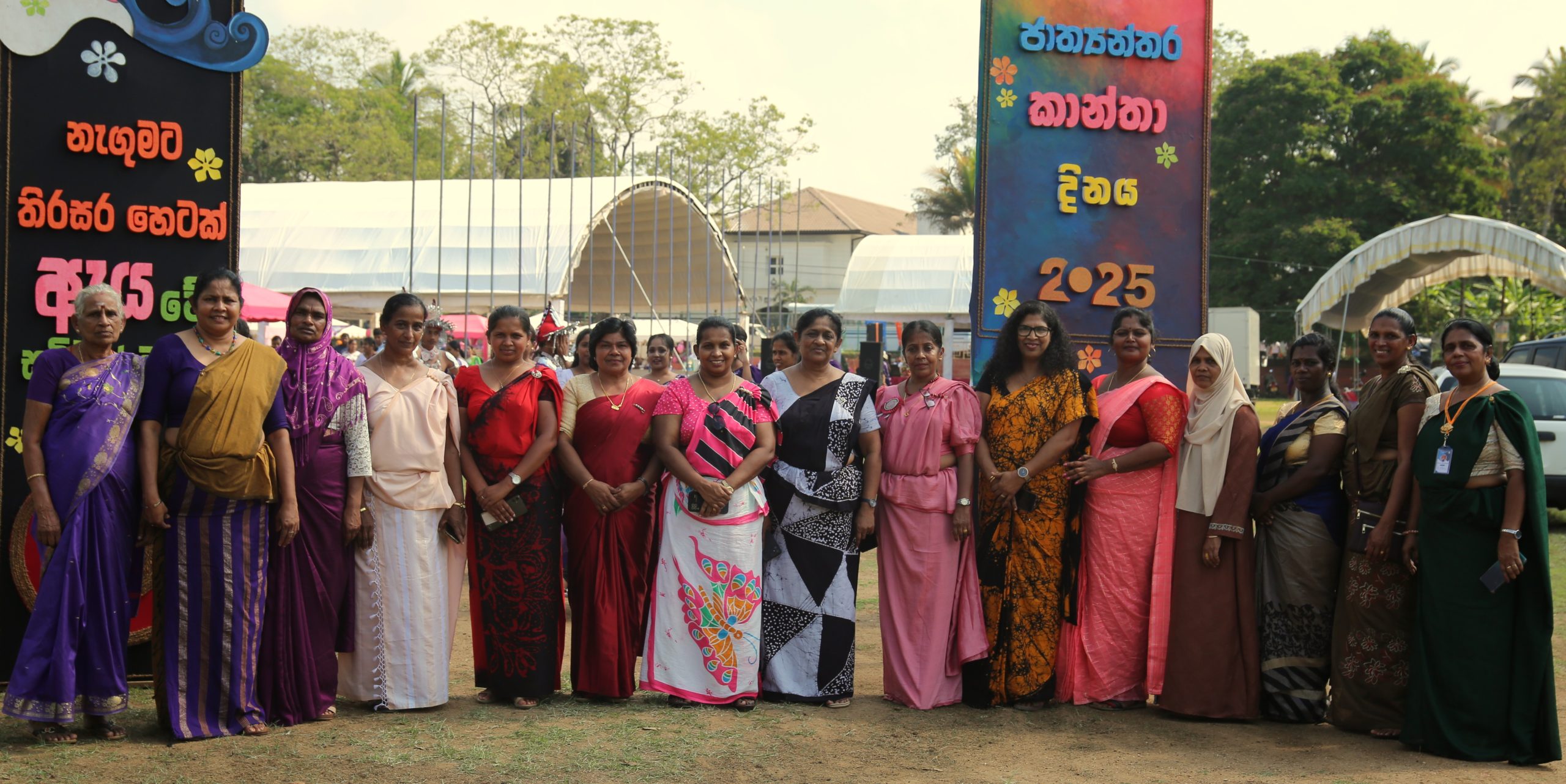
The organisation works through grassroots women’s forums, either established by WDC or linked with like-minded women-led organisations that share its commitment to gender equality, social justice, and inclusion.
Today, WDC collaborates with 16 women’s forums across 14 districts — Kandy, Matale, Badulla, Nuwara Eliya, Galle, Hambantota, Monaragala, Ratnapura, Anuradhapura, Batticaloa, Ampara, Kilinochchi, Mannar, and Vavuniya—enabling its work to reach women and communities island-wide.
At the heart of this model is WDC’s investment in long-term capacity building. Women’s forums are supported through:
-
Leadership and organisational development
-
Training on rights, gender equality, disability inclusion, and governance
-
Programme planning, implementation, and monitoring skills
-
Advocacy, networking, and engagement with duty bearers
Through this process, forums are not treated as implementing partners alone, but as independent, women-led civil society actors capable of sustaining their work beyond individual projects.
Once strengthened, women’s forums take the lead in disseminating WDC’s services and thematic work within their districts. They respond to local needs, mobilise women at the grassroots, and implement initiatives in ways that are culturally and contextually relevant. Importantly, these forums also act as critical feedback mechanisms, channeling community experiences, challenges, and emerging issues back to WDC.
This two-way flow of knowledge enables WDC to ground its national level advocacy and policy engagement in lived realities from across the country.